Multiple years per customer
Monthly sections sit within a broader history of operational and financial information.
Data migration & business reporting
A migration and reporting workstream supporting 200+ customer locations across multiple clients. The work compiled, transformed, cleansed, and structured legacy operational and financial histories for centralized use within a broader modernization initiative.
Read the full legacy modernization engagement, including reporting and invoicing →
The work, at a glance
SOLLUS developed a defined data migration and reporting workstream for an industrial supply company. The wider engagement supported more than 200 customer locations across multiple clients, including clients with several locations. The migration consolidated, cleansed, and structured spreadsheet-based operational and financial information for centralized reporting. SOLLUS also contributed to structured invoice generation within the same engagement.
The screenshots below contain mock sample data. They illustrate the kinds of information involved; they are not client records. The examples show different years, rather than a matching before-and-after dataset.
01 / The starting point
Legacy spreadsheets contained several years of operational and financial information. The worksheet below illustrates one annual view: monthly pressure, dew point, flow, usage, and energy information, with headings, units, and notes that give the numbers meaning.
Monthly operating information · 2023 example
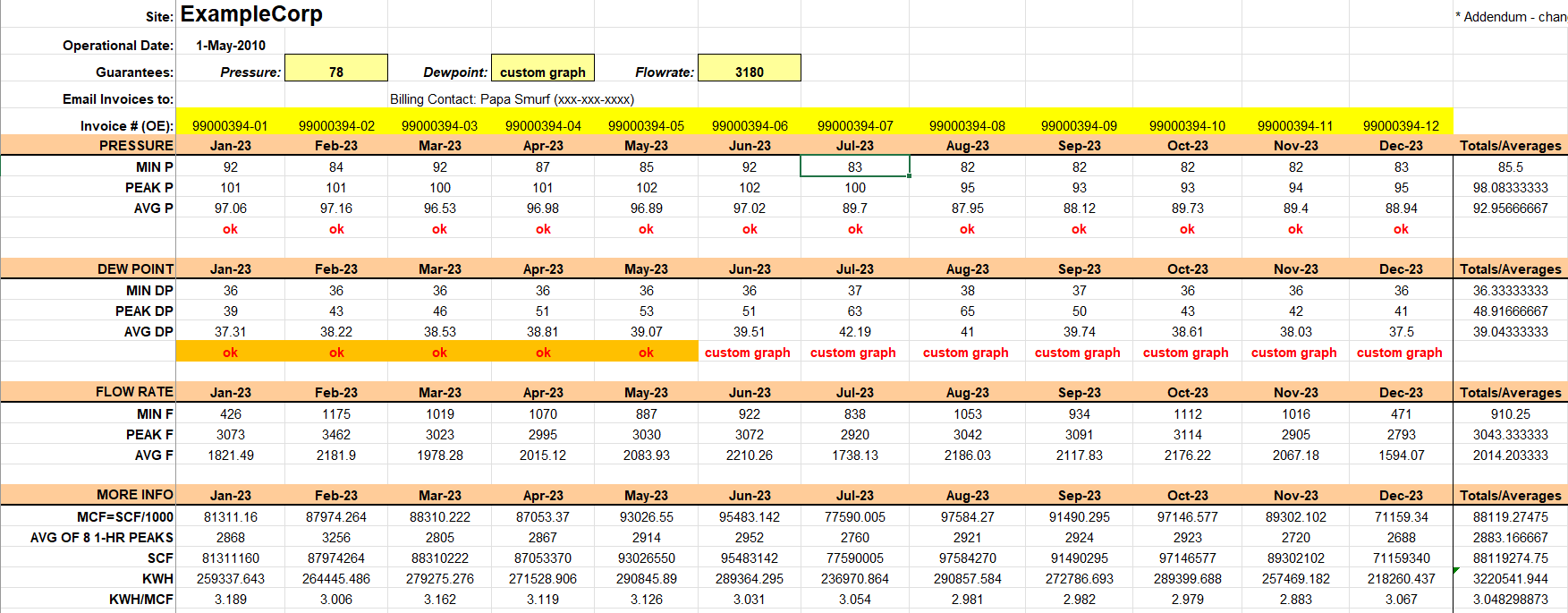
Monthly sections sit within a broader history of operational and financial information.
Operating conditions, consumption, energy, and notes share the same worksheet.
Multiple clients contributed operating histories spanning more than 200 locations. Location count does not imply the same number of clients or files.
02 / The migration
The workflow compiled information across customers and years, transformed and cleansed it, and established consistent records for database retention. The diagram follows the progression from independent files to one source of truth.
A conceptual view of the completed migration approach
Legacy spreadsheets containing operational and financial history across customer locations.
Independent customer historiesConsolidate, transform, and cleanse information into consistent business records.
Prepared for retentionCustomer histories retained in one organized location.
One source of truthA unified foundation for reviewing customer history and operational and financial information.
Information ready for reviewEvidence of the transition
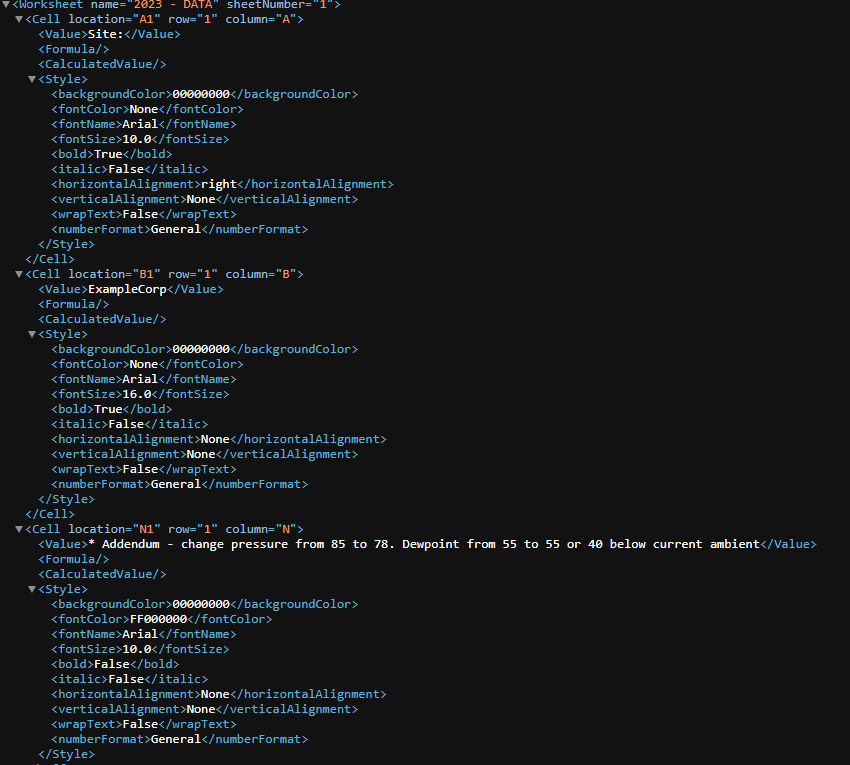
The intermediate representation makes worksheet information explicit: values sit within a structure that identifies the worksheet and its cells. This is the bridge between a familiar spreadsheet and organized business records.
A small excerpt illustrates one stage of the programmatic transformation.
03 / The business connection
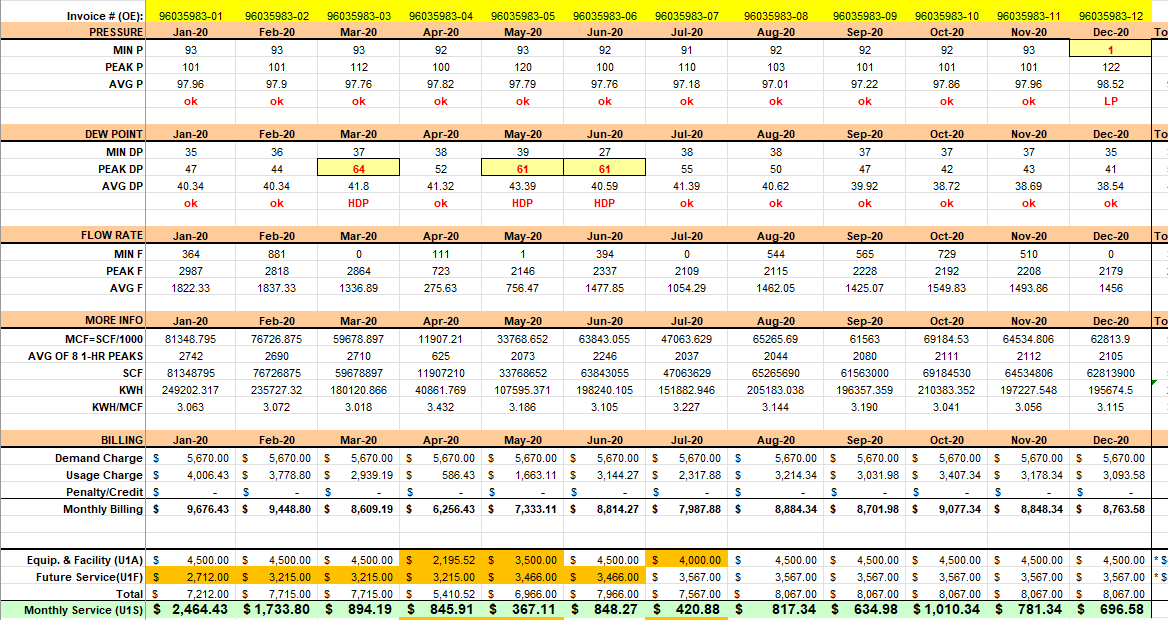
The second worksheet example makes that connection visible: process measurements and usage appear alongside demand charges, usage charges, monthly billing, and service amounts.
Process information above; charge categories below · 2020 example
Operating context
Pressure, dew point, flow, consumption, and energy use describe the process.
Financial context
Demand, usage, billing, and service amounts describe the charge information.
What this demonstrates
Compile multiple years of spreadsheet information supporting 200+ locations across multiple clients.
Transform, cleanse, and structure operational and financial information for database retention.
Keep customer histories in one organized location for review and reporting.
The same approach can help frame other migrations: understand existing records, identify the information that matters, and move it into a structure suited to its next use.
This case study complements the SOLLUS analytics portfolio by showing industrial business experience alongside data capture, visualization, and reporting work.
SOLLUS / Data & business processes
A useful migration starts with the business information you already have and the work it needs to support.
Keep exploring